

Choose a Hose That Handles Both Food Transfer and Cleaning
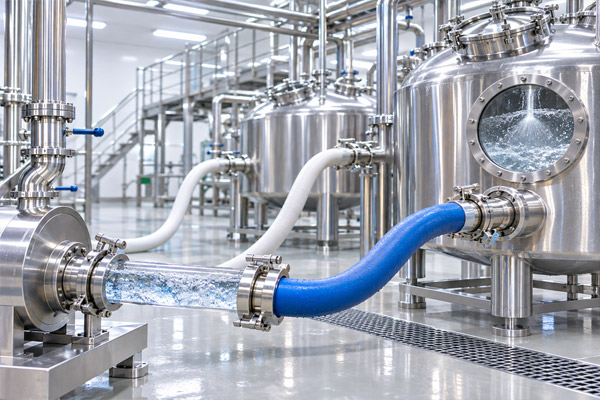
When comparing food grade rubber hose manufacturers, check the complete hose assembly against both the food product and the cleaning cycle. The lining, seals and fittings must suit the operating conditions. A food contact claim alone cannot confirm compatibility with every ingredient or cleaning chemical.
A beverage plant may transfer a cool drink, then circulate hot cleaning liquid through the same hose. These are different duties. Selecting the hose around the full production cycle helps buyers address this difference before installation.
Why Cleaning Compatibility Deserves More Attention
Cleaning in place, usually called CIP, circulates cleaning fluids through connected processing equipment without routine dismantling. Food plants are looking for ways to reduce avoidable cleaning time and water use while maintaining verified hygiene.
Hose selection supports that work, but buying a different hose does not automatically reduce water consumption. The complete line, cleaning method and operating controls affect the result. A useful purchasing decision starts with documented compatibility and a cleaning process approved by the plant’s quality team.
Share the Product and Cleaning Conditions Separately
Give the manufacturer or supplier two operating profiles. One should describe product transfer; the other should describe cleaning.
| Detail | Product Transfer | Cleaning Cycle |
|---|---|---|
| Medium | Ingredients, fat content and alcohol content where relevant | Cleaning chemicals and concentrations |
| Temperature | Normal and peak product temperatures | Cleaning temperature and exposure time |
| Operation | Pressure, suction requirements and flow | Cleaning pressure, flow and frequency |
Include the full sequence if the plant uses several cleaning agents. Ask for written confirmation covering the proposed conditions.
A general temperature range does not explain how long a hose can tolerate a particular chemical at that temperature.
Confirm the Lining for the Actual Food Product
The inner lining contacts the food, so its suitability deserves attention before the outer cover colour or appearance.
A hose intended for non-fatty beverages may not suit edible oils or fatty dairy products. Alcohol concentration and other ingredients can also affect selection. Describe the product accurately instead of requesting only a general food hose.
Hoses Market lists brewery and Food Grade Rubber Hose Manufacturers alongside other specialist hose options. These categories serve different duties. Confirm the exact product specification rather than treating every hose in a food-related range as interchangeable.
Review Fittings and Seals as Part of the Assembly
A suitable hose needs compatible connections. Ask how the selected fittings attach to the hose and how the assembled connection can be cleaned and inspected.
Check the seal material against both the food and the cleaning chemicals. Confirm that the connection dimensions match the existing equipment.
Discuss routing too. Tight bends, unsupported connections and unsuitable lengths can make handling difficult. Have the assembly provider confirm minimum bend requirements and the pressure and temperature limits of the complete assembly, including its components.
Make Identification Part of Changeover Planning
Give each hose an identification number linked to its specification, installation date and service history. Record which process or product group it serves.
Dedicated hoses may form part of a plant’s allergen control plan. Colour coding can help operators identify equipment, but colour alone cannot establish cleanliness or prevent allergen cross-contact. The quality team should define and verify the required controls.
Keep hose labels and purchasing records consistent so replacement orders refer to the correct specification.
Plan Inspection and Replacement Before Production Starts
Agree on inspection points and acceptance criteria before the hose enters service. Include the lining, cover, connection areas and seals.
Blisters, cracks, exposed reinforcement, leakage or unusual changes in flexibility need assessment. Follow the manufacturer’s guidance and the plant’s maintenance procedure when deciding whether equipment should remain in service.
Request storage and cleaning instructions with the order. Cleaned hoses need suitable draining and protected storage. Replacement planning should use actual service conditions and inspection findings rather than an assumed universal lifespan.
Conclusion
Choosing food grade rubber hose manufacturers involves matching the complete assembly to ingredients, cleaning conditions and plant operations. Clear specifications and traceable records give buyers a stronger basis for selection. Hoses Market by Flexaflex Hoses International is a hose supplier in Ahmedabad, Gujarat, serving requirements across India. Share your product details and CIP conditions to discuss suitable options and request a quotation.
Buyer Intent FAQs
Contact Hoses Market by Flexaflex Hoses International with your application and delivery requirements. Confirm the exact hose model, specifications and supporting documents before ordering.
Provide the food product, cleaning chemicals, concentrations, temperatures, operating pressure, suction duty, internal diameter, hose length, connection details and required quantity.
Only when the selected hose is suitable for the chemical, concentration, temperature, exposure time and cleaning frequency. Request confirmation for the complete proposed cleaning cycle.
Ask for the product datasheet, relevant food contact documentation, cleaning guidance and available batch identification. Confirm that the documents apply to the exact hose supplied.
Check compatibility with both products and their cleaning requirements. The plant’s quality team should also assess allergen controls and verify the changeover procedure before shared use.
Ask whether a complete assembly can be supplied. Confirm fitting type, seal material, finished length, operating limits and any required testing before approving the order.
Specify the required vacuum conditions as well as temperature, diameter and bend requirements. Choose a hose with documented suction suitability rather than assuming a discharge hose will work.