


Why Blasting Performance Depends on More Than the Compressor
When surface cleaning slows down, the compressor often receives the blame. Yet the hose connecting the blast pot to the nozzle can also affect performance. Comparing Sandblast Hose Manufacturers should include how the proposed hose fits your complete blasting setup.
A hose carries fast moving abrasive material under pressure. Its internal diameter, length, routing and condition influence how effectively that material reaches the nozzle. A poorly matched hose can create handling difficulties or unnecessary restrictions.
For fabrication shops, foundries and surface preparation contractors, the goal is to complete work to the required finish with fewer interruptions. That makes hose selection a production decision as well as a purchasing decision.
What Makes a Sandblast Hose Different From an Air Hose
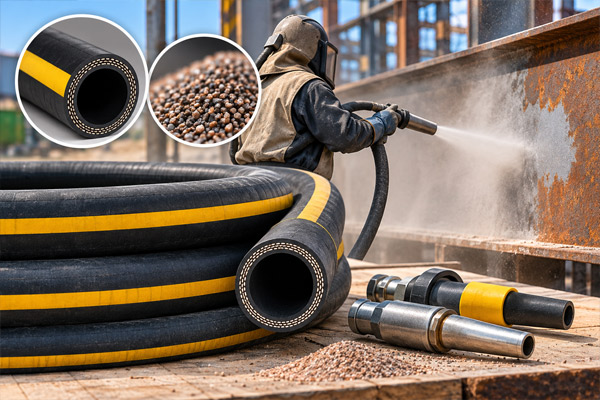
A sandblast hose carries a mixture of compressed air and abrasive particles. Its inner tube must withstand wear from that moving material.
A general compressed air hose is not automatically suitable for this duty, even if its pressure rating appears adequate. Abrasive blasting requires equipment specifically designed for the application.
When reviewing a hose, ask about its inner tube, reinforcement, outer cover and electrical characteristics. Each serves a different purpose.
The lining deals with internal abrasion. Reinforcement supports the pressure capability, while the cover protects against external conditions. Confirm the complete construction rather than judging suitability by wall thickness alone.
A Practical Checklist for Comparing Quotations
Give every supplier the same application details. This makes quotations easier to compare and reduces assumptions.
| Buying Detail | What to Confirm |
| Blasting equipment | Machine model and nozzle specification. |
| Abrasive | Material type and particle size. |
| Hose dimensions | Internal diameter, external diameter and length. |
| Pressure | Required working pressure and hose rating. |
| Construction | Lining, reinforcement and cover details. |
| Electrical properties | Conductivity specification for the application. |
| Connections | Compatible couplings and nozzle holder. |
| Handling | Weight, flexibility and bending limits. |
| Supply scope | Hose only or assembled connections. |
| Delivery | Availability, dispatch date and freight. |
Ask whether the quotation includes accessories. A lower price may cover only the hose, while another quotation may include compatible connection components.
How Should Hose Diameter Match the Blast Nozzle
The nozzle orifice and hose internal diameter should be considered together. Selecting a hose only because it fits an existing coupling can leave the blasting system poorly matched.
An undersized hose can restrict flow and contribute to pressure loss. The correct size also depends on the equipment configuration and hose run.
Provide the supplier with the nozzle orifice size, blast machine details and required operating conditions. Follow the equipment manufacturer’s sizing guidance.
Check the nozzle’s current condition as well. A worn nozzle may have a larger opening than its original specification, changing air demand.
Replacing the hose without reviewing the nozzle and air supply may leave the original performance problem unresolved.
Why Hose Length and Routing Matter on Site
A hose must reach the work area comfortably, but extra length should have a clear purpose. Longer runs can increase pressure losses and the amount of hose operators must manage.
Plan the route before ordering. Note obstacles, access points and areas where the hose could rub against rough surfaces.
Avoid sharp bends and follow the specified minimum bend radius. Arrange the route to limit strain near couplings and nozzle holders.
A workshop blasting small components may have different handling needs from a contractor working around large steel structures. Explain the actual job layout to the supplier rather than using one standard length for every application.
What Should You Ask About Abrasion Resistance
The phrase abrasion resistant does not explain how two hoses compare. Ask sandblast hose manufacturers for the technical data supporting the product description.
Where abrasion test results are available, check the test method and conditions. Results from different methods should not be treated as directly comparable.
Also share the abrasive type, particle size, operating pressure and daily usage. These details help assess the application.
No supplier can determine service life from hose diameter alone. Routing, media, handling and operating conditions all influence wear.
Track actual use after purchase. Record operating hours, inspection findings and replacement reasons to build a useful comparison between approved products.
Why Conductivity and Coupling Fit Need Attention
Moving abrasive can generate static electricity. Ask for a hose intended for abrasive blasting with the electrical properties required by your equipment and site.
Confirm the supplier’s conductivity specification and the applicable inspection requirements. A conductive hose does not remove every grounding requirement from the blasting system.
Couplings and nozzle holders must also fit the selected hose correctly. Both internal and external dimensions matter.
Request compatible connection details and follow the equipment manufacturer’s assembly instructions. Confirm required locking devices and safety restraints.
Changing the hose while keeping unsuitable or worn connection parts can leave the assembly unreliable.
How Do You Compare Cost per Completed Job
Purchase price is easy to compare. Operating value requires records.
Include hose expense, replacement time and interruptions when reviewing cost. Compare completed work only when the required surface finish and operating conditions are reasonably similar.
For example, a hose that is easier to handle may suit a mobile job better than a heavier option. A stationary installation may place greater emphasis on external durability.
Avoid choosing the lightest or thickest hose automatically. The suitable balance depends on the job.
Inspect the hose according to equipment guidance and remove damaged hoses from service. A low replacement cost has little value if the hose is unsuitable for continued use.
Sourcing Sandblast Hoses for Ahmedabad and Gujarat Projects
Buyers in Ahmedabad, Gujarat and elsewhere in India should share site requirements before requesting availability.
When contacting Hoses Market, provide nozzle details, abrasive type, hose dimensions, working pressure and connection requirements. Ask for the current datasheet and confirmation of the proposed application.
Clarify delivery arrangements and whether hose assemblies or accessories are included. For repeat purchases, retain the approved specification so later orders can be checked against it.
Conclusion
The right sandblast hose supports the complete blasting setup. Compare sizing, abrasion data, handling, conductivity and connection compatibility alongside price.
Start with your equipment details and working conditions. Then obtain a written specification and confirm the purchase scope. This gives your team a clearer basis for selecting a hose that suits the job.
Frequently Asked Questions
Send the blast machine model, nozzle orifice size, abrasive type, pressure, required length and hose dimensions. Include coupling details, quantity and delivery location. Describe the route and handling conditions where possible.
Use a hose specifically designed for abrasive blasting. An air hose pressure rating alone does not establish resistance to abrasive wear or suitable electrical properties. Confirm compatibility with the blasting equipment before purchase.
Use the nozzle specification and equipment manufacturer’s guidance. Consider the full hose length, required airflow and connection dimensions. Ask the supplier to explain the proposed size rather than matching only the existing coupling.
No. Wall thickness does not establish overall suitability. Compare construction, pressure capability, abrasion data, flexibility and weight. Choose a hose that meets the application without creating unnecessary handling difficulties.
Reuse should depend on condition, dimensional compatibility and manufacturer guidance. Have the connections checked for wear and damage. Do not assume a coupling is suitable simply because it was fitted to the previous hose.
Service life varies with abrasive, pressure, routing and handling. Request inspection and replacement guidance for the selected hose. Use maintenance records to assess performance; do not continue using a damaged hose to reach an expected lifespan.
Confirm the approved specification, electrical properties, connection requirements and supply scope. Review delivery dates, documentation and the process for resolving incorrect items. If changing products, assess a suitable sample before committing to the full quantity.