


How Smart Hydraulic Hoses Improve Safety Efficiency and Machine Uptime
Hydraulic systems are becoming smarter, safer, and easier to maintain. This shift is creating new expectations for hydraulic hose manufacturers. Buyers now look beyond pressure rating and price. They want flexible hoses, longer service life, abrasion resistance, clear identification, and dependable performance in difficult conditions.
One of the biggest trends is condition-based maintenance. Instead of waiting for a hose to leak or burst, maintenance teams inspect wear, heat, vibration, fittings, and pressure changes at planned intervals. Some systems also use sensors and digital service records to find early warning signs. This can reduce sudden breakdowns and support safer operations.
Why Smart Hydraulic Hoses Matter
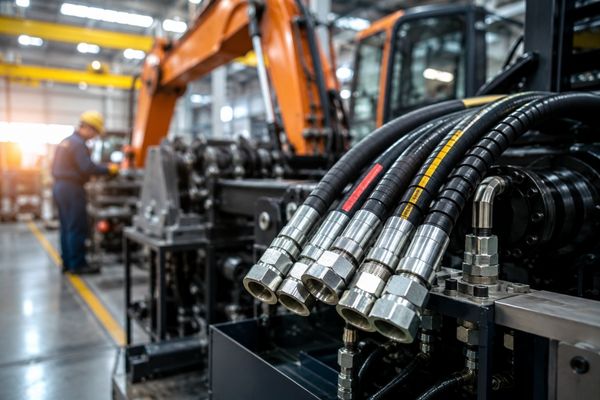
A hydraulic hose carries pressurised fluid between pumps, valves, cylinders, and moving machine parts. It may work around heat, dust, oil, chemicals, sharp surfaces, and continuous movement. Even a small defect can cause fluid loss, poor performance, or a shutdown.
Modern hydraulic hose manufacturers focus on the complete assembly. The inner tube, reinforcement layer, outer cover, fittings, crimping, bend radius, and installation route must work together.
The updated ISO 18752 standard covers several classes, grades, and types of reinforced hydraulic hoses. It also explains that the maximum working pressure of an assembly depends on its lowest-rated component.
Condition Monitoring Supports Better Maintenance
Traditional maintenance often replaces a hose only after failure or after a fixed period. Predictive maintenance uses the actual condition of the hose.
Teams can record the installation date, machine hours, pressure, temperature, fluid type, and inspection results. They should check for cracks, exposed reinforcement, loose fittings, hardening, twisting, rubbing, and oil near connections. Digital records make it easier to compare changes over time.
This approach is useful in factories, construction equipment, mining machines, agricultural machinery, and material-handling systems. A worn hose can be replaced during planned maintenance instead of stopping production without warning.
Safety Is Driving Better Hydraulic Hose Design
High-pressure hydraulic fluid can cause serious injuries. Official workplace accident records include cases where damaged hoses and loose connections caused hydraulic fluid injection injuries requiring hospital treatment.
Hydraulic oil released as a fine mist can also create a fire risk when it reaches an ignition source.
Responsible hydraulic hose manufacturers therefore focus on burst resistance, abrasion protection, correct fittings, secure crimping, and pressure testing. Clear markings help users confirm hose size, pressure class, and application before installation.
Workers should never search for a leak with bare hands. The machine should be stopped, stored pressure should be released, and the hose should be inspected using a safe method. A damaged pressure hose should normally be replaced instead of repaired with tape or temporary clamps.
Compact Hydraulic Hoses for Modern Machines
Many machines are becoming smaller and more tightly packed. This has increased demand for compact hydraulic hoses with smaller outside diameters and improved bend performance.
A compact hose must still match the required pressure, temperature, impulse cycles, and hydraulic fluid. It should never be forced below its recommended bend radius because tight bends can place extra stress near the fitting and shorten hose life.
Good hydraulic hose manufacturers study the complete application before suggesting a product. Important details include:
- Maximum working pressure
- Possible pressure spikes
- Operating temperature
- Hydraulic fluid type
- Machine movement
- External abrasion
- Fitting size
- Available installation space
Choosing a hose only by its diameter can lead to leakage, overheating, early wear, and repeated replacement.
Sustainable Materials Are Gaining Attention
Sustainability is another growing topic in industrial manufacturing. Research into recyclable polymers, bio-based rubber, and closed-loop materials is increasing. The main challenge is improving environmental performance without reducing strength, flexibility, chemical resistance, or safety.
Practical improvements may include reducing production waste, improving material use, producing longer-lasting outer covers, controlling energy consumption, and separating metal fittings from discarded hoses where recycling facilities are available.
Longer hose life can also reduce replacement frequency, transport requirements, waste generation, and emergency maintenance.
Demand Across Major Industrial Regions
Hydraulic hoses are widely used across industrial regions in India, including Ahmedabad, Pune, Chennai, Bengaluru, Hyderabad, Rajkot, Mumbai, and Delhi NCR.
Important applications include hydraulic presses, earthmoving machines, cranes, injection moulding machines, agricultural equipment, steel plants, mining machinery, machine tools, and material-handling systems.
Local availability may support faster replacement and technical assistance. However, buyers should still compare product suitability, testing procedures, material traceability, manufacturing knowledge, and after-sales support.
How to Select Hydraulic Hose Manufacturers
Before requesting a quotation, buyers should provide complete application information. This includes maximum pressure, pressure surges, temperature, fluid type, hose length, fitting details, bend requirements, machine movement, and surrounding conditions.
Buyers should also ask about test standards, material traceability, assembly inspection, pressure testing, technical documents, and replacement guidance.
A low-priced hose may become expensive when it causes oil leakage, production downtime, equipment damage, or repeated failure. The correct hose should deliver safe and consistent performance throughout its expected working life.
Conclusion
The hydraulic hose industry is moving towards smarter inspection, safer design, compact construction, and responsible material use. Hydraulic hose manufacturers that combine correct engineering with clear technical support can help industries improve machine uptime and reduce avoidable failures.
Every hydraulic hose should be selected as an important system component and not treated as a simple rubber pipe. Correct selection, installation, inspection, and timely replacement can improve safety, productivity, and long-term operating value.
FAQs
They produce hydraulic hoses and complete hose assemblies that carry pressurised fluid in industrial and mobile hydraulic systems.
Check the pressure, temperature, fluid compatibility, hose size, bend radius, machine movement, fittings, and external working conditions.
Condition monitoring helps maintenance teams identify wear, leakage, heat damage, and fitting problems before a sudden failure occurs.
A damaged pressure hose should normally be replaced with a correctly specified hose assembly. Temporary repairs can create serious safety risks.
Hydraulic hoses are used in construction, agriculture, manufacturing, mining, steel processing, machine tools, mobile equipment, and material handling.