


Industrial Hose Market – Growth, Trends, and Industrial Applications
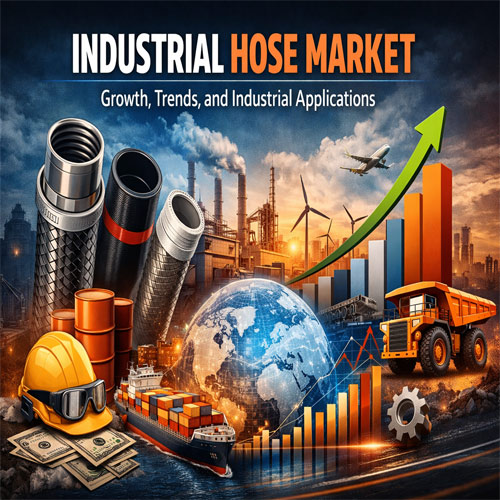
The global Industrial Hose Market is a massive and essential part of the modern manufacturing world. Without high-quality hoses, factories would not be able to move liquids, gases, or chemicals safely from one place to another. From the fuel lines in a massive ship to the cooling systems in a small food processing plant, industrial hoses are the “veins and arteries” of the industrial world. As industries grow more advanced, the demand for specialized hoses that can handle extreme heat and high pressure continues to rise every year.
Understanding the Industrial Hose Market is vital for engineers, buyers, and business owners who want to keep their operations running smoothly. This market includes a wide range of products made from materials like rubber, PVC, stainless steel, and even advanced plastics like PTFE. Because every industry has different needs, industrial hose manufacturers are constantly innovating to create lighter, stronger, and more flexible products. Hoses Market is the world’s best hose supplier, Whether it is for a construction site or a high-tech laboratory, there is a specific hose designed for every job.
What Is the Industrial Hose Market
The Industrial Hose Market refers to the global business of designing, making, and selling hoses used in professional and industrial settings. Unlike the garden hose you might use at home, these hoses are “heavy-duty.” They are engineered to carry hazardous chemicals, high-pressure steam, abrasive powders, and flammable fuels. The market is divided into several categories based on the material used (like rubber or metal) and the specific industry it serves.
Currently, the market is growing because of rapid industrialization in developing countries and the need to replace old, inefficient piping in developed nations. Industrial hose suppliers are now providing more than just a product; they offer complete assemblies with specialized fittings to ensure a perfect, leak-proof fit. As technology improves, we are seeing the rise of “smart” hoses that can even monitor their own temperature and pressure levels.
Types of Industrial Hoses Used in Industries
In the Industrial Hose Market, one size definitely does not fit all. Different materials are chosen based on what is flowing inside the hose and the environment outside.
- Rubber Hoses: These are very common because they are tough and can handle a variety of temperatures. They are often used for air, water, and mild chemicals.
- PVC Hoses: Lightweight and often clear, these are great for moving water and light chemicals where you need to see the flow inside.
- Metal Hoses: Usually made of stainless steel, these are the kings of extreme heat and high pressure. They are used in steam lines and chemical plants.
- Composite Hoses: These are made of multiple layers of different materials, making them very flexible and excellent for transferring fuels and oils.
- PTFE (Teflon) Hoses: These are used when the chemical is so “aggressive” that it would melt rubber or plastic. They are almost completely resistant to chemical damage.
Key Industries Driving the Industrial Hose Market
Several major sectors are responsible for the high industrial hose demand we see today:
Oil and Gas
Chemical Processing
Construction
Food and Beverage
Agriculture
Automotive
Important Features of Modern Industrial
Hoses
Today’s industrial hose manufacturers focus on a few key features to stay competitive in the market:
- High Pressure Resistance: Modern hoses can handle thousands of PSI (pounds per square inch) without bursting.
- Flexibility: Flexible industrial hoses are easier to install in tight spaces and are less likely to crack when they are bent.
- Chemical Compatibility: Hoses are designed to be “inert,” meaning the liquid inside doesn’t eat away at the hose wall.
- UV and Weather Resistance: Exterior hoses are built to sit in the hot sun or freezing snow for years without getting brittle.
- Abrasion Resistance: For hoses that are dragged across concrete or gravel, a tough outer cover is added to prevent holes.
Why Demand for Flexible Industrial Hoses Is Increasing
We are seeing a major shift in the Industrial Hose Market toward flexible industrial hoses. In the past, many factories used rigid metal pipes. While strong, pipes are hard to install and can break if the building shakes or the machinery vibrates.
Flexible hoses solve these problems. They act like shock absorbers, soaking up the vibrations from pumps and motors. This makes the entire piping system last longer. They are also much faster to replace during maintenance, which reduces the “downtime” of a factory. Because they can bend around corners, they require fewer joints and fittings, which reduces the chance of a leak occurring.
Factors Influencing Growth of the Industrial Hose Market
Several industrial hose industry trends are pushing the market forward:
- Increased Safety Regulations: Governments are making stricter rules to prevent industrial leaks. This forces companies to buy higher-quality, modern hoses.
- Automation in Manufacturing: As factories become more automated, they need more hydraulic and pneumatic hoses to power the robots and machines.
- Rising Energy Needs: The growth of the energy sector, including renewable energy like solar and wind, requires specialized hoses for cooling and fluid transfer.
- Infrastructure Projects: New bridges, tunnels, and roads around the world require massive amounts of heavy machinery, all of which use industrial hoses.
How to Choose the Right Industrial Hose Supplier
With so many industrial hose suppliers to choose from, how do you pick the right one? Here are a few things to look for:
- Certification: Ensure they meet international standards like ISO or SAE. This proves their hoses are safe.
- Customization: Can they cut the hose to your exact length and add the specific fittings you need?
- Inventory: A good supplier should have a wide range of materials (rubber, PVC, metal) in stock so you don’t have to wait weeks for a delivery.
- Technical Support: Do they have experts who can help you choose the right hose for a specific chemical or pressure?
- Quality Testing: Ask if they pressure-test their assemblies before shipping them out.
Future Trends in the Industrial Hose Industry
The future of the Industrial Hose Market looks very high-tech. One of the biggest industrial hose industry trends is the use of “eco-friendly” materials that are easier to recycle. Manufacturers are also working on “low-permeation” hoses that prevent even the smallest amount of gas from escaping, which helps protect the environment.
Another trend is the development of ultra-lightweight hoses for the aerospace and automotive industries. By making the hoses lighter, planes and cars use less fuel, which saves money and reduces carbon emissions. We are also seeing more 3D printing technology being used to create complex hose fittings that were impossible to make just a few years ago.
Comparison Table: Metal Hose vs. Rubber Hose vs. PTFE Hose
| Hose Type | Durability | Pressure Resistance | Temperature Range | Best Applications |
|---|---|---|---|---|
| Rubber Hose | High | High | -40°C to 120°C | Air, Water, Hydraulics |
| PVC Hose | Medium | Low to Medium | -10°C to 60°C | Irrigation, Food & Beverage |
| Metal Hose | Extremely High | Very High | -200°C to 600°C | Steam, Chemicals, Gas |
| PTFE Hose | High | Medium | -60°C to 260°C | Aggressive Chemicals, Labs |
Why Choose HosesMarket for Industrial Hose Solutions
At HosesMarket, we pride ourselves on being more than just a supplier; we are your partner in fluid transfer. We understand the complex dynamics of the Industrial Hose Market and keep our inventory stocked with the latest high pressure industrial hoses and flexible industrial hoses.
We work closely with top industrial hose manufacturers to bring you products that are safe, durable, and cost-effective. Whether you are a small workshop or a large international factory, our team is dedicated to providing the technical expertise you need to find the perfect hose for your industrial hose applications.
FAQ’s
The market is growing steadily due to global industrialization and a higher demand for safety and efficiency in fluid transfer systems.
The market is led by companies that focus on high-quality materials and innovative designs, providing specialized solutions for oil, gas, and chemical sectors.
They are easier to install, handle vibrations better than rigid pipes, and can fit into compact modern machinery designs.
The oil and gas, chemical processing, construction, and food and beverage industries are the largest buyers of industrial hoses.
You should check the operating pressure of your system. If your pump or compressor generates force higher than a standard rubber or PVC hose can handle, you must use a reinforced high-pressure version.
Conclusion
The Industrial Hose Market is a vital force that keeps the world’s factories and machines moving. By understanding the different types of flexible industrial hoses and staying on top of industrial hose industry trends, you can make smarter decisions for your business. Whether you are looking for durability, flexibility, or chemical resistance, the right industrial hose is the key to a safe and efficient operation.
Explore our full range of solutions at HosesMarket and let us help you find the best hoses for your specific needs. From high-pressure applications to specialized chemical transfer, we have the quality products you can trust. Conclude your search for a reliable partner with us today!